
Japan’s culinary heritage is deeply rooted in the art of fermentation and preservation. Techniques like pickling, miso-making, and sake brewing don’t just extend the shelf life of ingredients – they also unlock rich, complex flavors that define the country’s unique food culture. From the crunch of lacto-fermented veggies to the umami punch of miso, these methods embody the seasons and traditions that have shaped Japanese cuisine over centuries. Exploring this gastronomic alchemy can reveal a whole new world of flavors for the curious palate.
Key Points
- Traditional Japanese cooking emphasizes fermentation techniques like pickling, miso-making, and sake brewing to enhance flavors and preserve seasonal ingredients.
- Miso, a fermented paste made from soybeans, koji, and salt, is a staple in Japanese cuisine, adding umami and depth to dishes.
- Lacto-fermentation is used to pickle vegetables, resulting in a crunchy texture and tangy flavor profile.
- Drying and salting are common preservation methods in Japanese cooking, allowing for the use of seasonal ingredients year-round.
- The artistry and cultural significance of Japanese culinary traditions are showcased through the preparation of delicate wagashi confections and the precise brewing of matcha tea.
Overview of the Traditional Japanese Cooking Experience
Maana Experiences offers a unique opportunity to explore the rich culinary traditions of Japan.
Focusing on fermentation and preservation techniques, this traditional Japanese cooking experience is located in the historic city of Kyoto. Priced at €312.80 per person, the program includes morning and afternoon workshops covering tea, sweets, drinks, and snacks.
Private transportation is provided, with a meeting point in central Kyoto. The tour is a private affair, catering only to your group.
While not wheelchair accessible, it’s conveniently located near public transportation. Confirmation is subject to availability, and no refunds are offered for cancellations.
You can also read our reviews of more tours and experiences in Kyoto.
Tea and Sweets Workshop
The morning tea and sweets workshop introduces participants to the art of traditional Japanese tea preparation and confectionary making.
Guests learn to whisk matcha green tea, a time-honored practice requiring focus and precision. They also discover the intricate craft of wagashi, or Japanese sweets, crafting delicate treats such as:
- Mochi – soft, chewy rice cakes
- Daifuku – mochi filled with sweet bean paste
- Higashi – crisp, bite-sized confections
- Manjū – steamed buns with a sweet filling
The workshop provides a hands-on experience to appreciate the elegance and harmony of these revered Japanese culinary traditions.
Drinks and Snacks Workshop
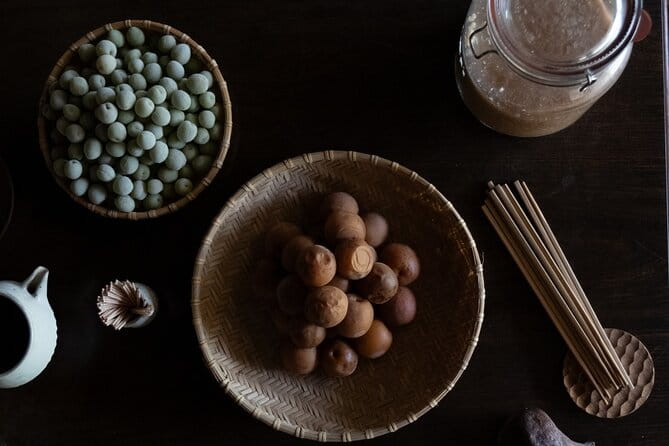
After the serene tea and sweets experience, the afternoon workshop delves into the world of traditional Japanese drinks and snacks. Participants dive into preparing classic Japanese beverages and light bites.
| Drinks | Snacks |
|---|---|
| Matcha green tea | Mochi |
| Hojicha roasted tea | Onigiri rice balls |
| Amazake sweet fermented rice drink | Nori seaweed crackers |
Hands-on instruction covers the nuances of each preparation, along with the cultural significance. By the end, guests have a deeper appreciation for the artistry and balance of authentic Japanese refreshments.
Transportation and Meeting Point
To get to the workshop, private transportation is provided.
The meeting point is at 82 Kamikinoshitachō, Kamigyo Ward, Kyoto, 602-0017, Japan.
Recommended transport options include:
- Taxi (Uber/GO apps or hotel arrangement)
- Near public transportation
- Easily accessible location
- Convenient for participants
The workshop starts at 10:00 AM, and it’s a private tour, so only your group will participate.
Just keep in mind that the venue isn’t wheelchair accessible.
Tour Information
The tour begins promptly at 10:00 AM.
It’s a private experience, so you’ll have the undivided attention of the instructor.
The workshop isn’t wheelchair accessible, but it’s near public transportation if you need to get there on your own.
The tour lasts the entire day, with a morning session focused on tea and sweets, followed by an afternoon session covering drinks and snacks.
All fees and taxes are included, so you don’t need to worry about any additional costs.
Just be ready to learn about the art of traditional Japanese cooking techniques.
Booking and Cancellation Policy
Booking this traditional Japanese cooking experience is easy. You’ll receive confirmation within 48 hours, subject to availability. Just keep in mind this is a non-refundable package – no refunds for cancellations.
The process is pretty straightforward:
- Book your spot online
- Get your confirmation
- Show up at the designated meeting point on time
- Enjoy your immersive cooking workshop!
Convenient private transportation is provided, so you can focus on learning traditional Japanese techniques like fermentation and preservation.
Don’t miss this chance to dive into Kyoto’s rich culinary heritage.
Fermentation Techniques in Japanese Cuisine
Fermentation techniques hold a revered place in Japanese cuisine, unlocking layers of complex flavors and preserving ingredients with time-honored methods.
Traditionally, techniques like pickling, miso-making, and sake brewing utilize beneficial microbes to transform foods, enhancing their umami profiles.
Miso, for instance, is a fermented paste made from soybeans, koji, and salt, which develop rich, savory notes over months or years of maturation.
Similarly, pickled vegetables like takuan, a yellow daikon radish, gain their distinctive crunch and tang through lacto-fermentation.
These ancient practices continue to shape the distinct tastes and textures of contemporary Japanese cooking.
Preservation Methods in Japanese Cooking
Two key preservation methods in traditional Japanese cooking are drying and salting.
Drying foods like kelp, mushrooms, and seafood helps concentrate their flavors and extends their shelf life.
Salting is used to preserve everything from vegetables to meat.
Common salt-based techniques include:
- Pickling in salted rice bran (nukazuke)
- Salting fish and vegetables (shiozuke)
- Preserving in salt (shiokara)
- Curing with salt and sugar (nare-zushi)
These simple yet ingenious preservation methods allow Japanese cooks to enjoy seasonal ingredients year-round and create deeply complex, umami-rich flavors.
Frequently Asked Questions
What Are the Dietary Restrictions Accommodated?
The experience accommodates various dietary restrictions, including vegetarian, vegan, and gluten-free options. Participants are advised to inform the organizers of any special dietary needs when booking to ensure a tailored experience.
Can Participants Take Home the Food They Make?
Participants can take home the food they make during the workshop. The experience includes all materials and fees, allowing guests to enjoy their creations even after the class has ended.
Are There Breaks During the Full-Day Workshop?
Yes, there are breaks during the full-day workshop. The workshop is divided into an AM session for tea and sweets, and a PM session for drinks and snacks, allowing participants time to rest and take a break.
Can the Workshop Be Customized for Private Groups?
Yes, the workshop can be customized for private groups. The experience is a private tour, where only your group will participate. This allows for tailoring the activities to your group’s preferences.
Are There Any Discounts or Package Deals Available?
The workshop doesn’t offer any discounts or package deals, but it’s a private tour, so you and your group can customize the experience to your preferences. Just reach out to the organizers for more details.
The Sum Up
Traditional Japanese cooking techniques like pickling, miso-making, and sake brewing create bold, complex flavors that have stood the test of time. These preservation methods not only extend the shelf life of ingredients but also reflect Japan’s rich culinary heritage. From the tangy crunch of lacto-fermented veggies to the umami depth of miso, these time-honored practices continue to shape the country’s vibrant food culture.
More Tour Reviews in Kyoto
- Tour by Car With a Kyoto Native Away off Touristy|A Local Show You Secret Places
- Osaka or Kyoto Private Day Tour With English Driver Free Pickup
- Kyoto Millennium Shogun E-Bike Cycling Tour (East Course)
- Pedal Adventure Kyoto E-Bike Tour : True Kyoto Avoid the Crowds
- Authentic Kyoto Cuisine Tour With a Local Guide
- Private Guided Local Bar Crawl Experience in Kyoto
Not for you? Here's more things to do in Kyoto we have recnetly reviewed
- Tea Ceremony & Zen Meditation in Kyoto Samurai House(Mixed Group)
- Gion a Half Day Food Tour Designed for You With a Local Guide
- Matcha Making Experience in Kyoto
- F1 Japanese Grand Prix JR Chartered Train Departing From Kyoto
- Skip the Lines Basic Ticket at SAMURAI NINJA MUSEUM KYOTO
- Photo Shoot With a Private Vacation Photographer in KYOTO, JAPAN
- Kamo River’s Timeless Tales: A Self-Guided Audio Tour in Kyoto
- The Beauty of Kyoto – Historical Walking Tour of Higashiyama Area
- Japanese Cooking Class
- Arashiyama Bamboo & Must See Gardens With an Amazing Guide
- Kyoto-The City of the Dreams!
- Kyoto Custom Highlight: Private Walking Tour With Licensed Guide