
Exploring Split through a lens of its Communist-era history offers a fascinating twist on your usual Croatian travel itinerary. This small-group tour, offered by Pomalo Tours, takes you on a 3.5-hour journey through key locations tied to the city’s Soviet-influenced past. Priced at around $103 per person, it’s an investment in understanding a dimension of Split often overlooked by mainstream guides. Led by a local historian with a Master’s degree in history, the tour is limited to 8 travelers, providing an intimate experience where questions are encouraged and stories flow freely.
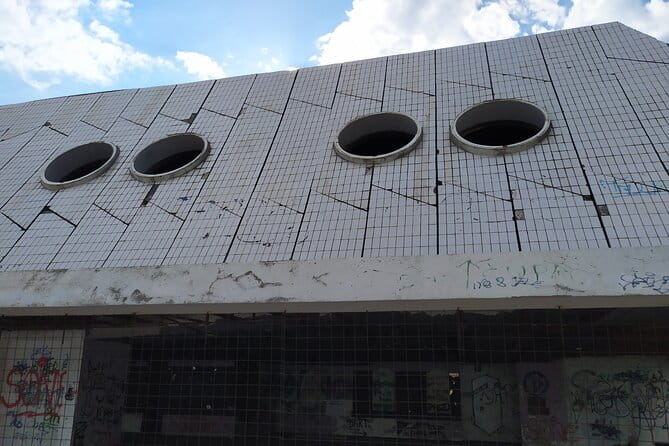
What I particularly love about this experience is how well it balances storytelling with visuals. Visiting sites like the Poljud Stadium, recognized internationally for Yugoslav architecture and even showcased in the Museum of Modern Art in New York, offers a tangible connection to the past. The guide’s in-depth insights bring to life the social and political fabric that shaped Split during the communist period. Plus, the inclusion of local hidden gems, like the Kopilica railway station and the China Wall, makes the tour stand out from typical city walks. It’s a chance to see beyond the postcard views and understand the architectural and societal ambitions of Yugoslavia’s socialist-era planning.
A small potential drawback is that at just over three hours, the tour moves at a brisk pace, covering a lot in a short span. For those craving a more relaxed, in-depth exploration or wishing to linger longer at specific sites, it might feel somewhat rushed. Also, the focus on history and architecture might not appeal to travelers more interested in leisure or scenic views alone—this is primarily a history-focused experience. Still, for curious visitors eager to learn about Split’s complex past, the tour’s depth compensates for the time constraint.
Key Points

- Expert-led storytelling: With a guide holding a Master’s degree in history, expect detailed, credible insights.
- Unique sites: From Poljud Stadium to the Kopilica railway station, you’ll explore locations many travelers miss.
- Concise but thorough: The 3.5-hour format packs in a lot of history without overstaying its welcome.
- Private transportation: The use of an air-conditioned vehicle makes moving between dispersed sites comfortable.
- Personalized experience: Small group size (max 8) often means a more engaging, tailored tour.
- Authentic insights: The tour digs into how Yugoslavia’s socialist policies influenced architecture, urban planning, and daily life.
A detailed look at the tour’s itinerary and what you’ll experience

You can also read our reviews of more tours and experiences in Split.
Starting Point: Trg Franje Tumana
Your journey begins at the bus station on Trg Franje Tumana, where the guide will introduce you to the tour’s purpose. This spot is central, making it a convenient meeting point. Here, you’ll also get a quick overview of Split during WWII and the upheaval that led to the rise of the communist regime in Yugoslavia. The guide will share photographs of wartime damages, giving context to the chaos that shaped the city’s post-war development.
Poljud Stadium and the China Wall
From there, there’s a brief panoramic stop at the famous Poljud Stadium, built during the communist period for the Mediterranean Games and recognized for its distinct Yugoslav architectural style. The stadium’s significance extends beyond sports; it even appeared in a Yugoslav architectural exhibition at MoMA in New York. Alongside, you’ll notice the “China Wall”, a striking example of socialist architecture, representing the era’s bold aesthetic ambitions. Expect to hear stories about how this stadium symbolized Yugoslavia’s sporting and cultural pride.
Prodajni centar Koteks
Next, a walk around Yugoslavia’s first shopping mall, Koteks, offers a window into consumer life during the socialist period. You’ll learn about the short-lived popularity of the mall and how its decline mirrored the broader economic and political shifts. The guide will reveal how Yugoslav citizens navigated a hybrid market—trying to find goods in a state-controlled economy that was sometimes “open west” and other times “closed east.” It’s a real eye-opener to understand how people’s creativity thrived even under restrictions.
Krstarica Neighborhood
The tour then moves into Krstarica, a neighborhood built to serve as a model of modern socialist urban planning. Considered a high-quality example worldwide, Krstarica was designed for quality of life—balancing work, leisure, and housing. Walking through, you’ll see signature architecture, such as the “Cruiser” building, each designed to reflect local architect’s unique styles. The guide discusses social policies, healthcare, education, and how Tito’s leadership influenced everyday life. It’s a rare chance to see how the ideals of socialism aimed to shape ideal communities.
- From Split: Krka Waterfalls Tour
- Plitvice Lakes Group Tour From Split
- Plitvice Lakes National Park Guided Day Tour From Split
- Zipline Croatia: Cetina Canyon Zipline Adventure From Omis
- Krka National Park Tour With Tour Guide & Wine Tasting From Split & Trogir
- Split: Krka National Park With Boat Cruise and Swimming
Kopilica Railway Station and Armored Train
The final stop, at Kopilica railway station, is poignant. Here, you’ll see the armored train on display—symbolic of the violent breakup and bloody wars that followed Yugoslavia’s collapse in the 1990s. The story behind this train encapsulates the tragic end of a political project that once symbolized hope and unity. It’s a reminder of how political ideals can turn into conflict, and the guide will explain why Yugoslavia couldn’t survive the pressures.
Ending the Tour
The journey concludes back at the starting point. Along the way, travelers receive a local soft drink, reminiscent of what was popular during the communist period, adding an authentic taste of history. The tour’s use of private, air-conditioned transportation ensures comfort when moving between sites, making it easier to focus on the stories rather than logistics.
Why this tour is a great value
Many travelers from reviews mention that Boris, the guide, is knowledgeable and engaging, delivering detailed insights that make history come alive. The intimate group setting often turns into a personalized experience, as one reviewer noted. The price of around $103 becomes more palatable when considering the depth of information, the professional guide, and the convenience of transportation. Compared to wandering on your own, where you might miss context, this tour offers a well-rounded, coherent narrative that deepens your understanding of Split’s past.
Who should consider this tour?
This experience suits travelers with a keen interest in architecture, political history, or urban planning. It’s perfect if you prefer guided stories over self-guided wandering, especially if you want to avoid the hassle of researching sites yourself. The tour’s limited size makes it ideal for those who enjoy small-group interactions and asking questions. It’s particularly valuable for visitors who want a nuanced perspective on Croatia’s history within the former Yugoslavia, especially relating to the socialist architectural feats and their legacy.
The Sum Up

This Small-Group Communist Tour of Split provides an insightful exploration of a pivotal era that shaped the city’s identity. With a knowledgeable guide, you’ll uncover stories behind iconic sites like Poljud Stadium and the China Wall, gaining a deeper understanding that goes beyond typical sightseeing. The private transportation and limited group size foster a relaxed environment where questions are encouraged, making it as much about learning as sightseeing.
While the tour is historically dense and moves quickly, it compensates by offering authentic, lesser-seen sites that tell the story of Split’s complex past. It’s especially suited for history enthusiasts, architecture lovers, and curious travelers who want to see beyond the surface and engage with the city’s socialist memories.
For those looking for a thought-provoking, well-organized, and genuinely enriching experience, this tour hits all the right notes. It may not be for everyone—those seeking leisurely, scenic days might prefer other options—yet anyone eager to understand how Split’s past influences its present will find this tour a valuable, eye-opening addition to their Croatian visit.
FAQs

- How long does the tour last?
Approximately 3 hours and 30 minutes. - What is included in the price?
The tour includes private transportation, an air-conditioned vehicle, and a local soft drink reminiscent of communist times. No entrance fees are charged at the stops. - Where does the tour start and end?
It begins at the bus station on Trg Franje Tumana and ends back at the same location. - Is this tour suitable for children?
Most travelers can participate, but since it’s focused on historical and architectural themes, it might be better suited for older children or teenagers with an interest in history. - How many people typically join?
The maximum group size is 8, ensuring a personalized experience. - Do I need to book in advance?
Yes, it’s recommended to book about 10 days ahead to secure a spot. - Can I cancel the tour?
Yes, free cancellation is available up to 24 hours before the start. - What makes this tour special?
You get a deep dive into Split’s communist past with insights from a well-educated local guide, visiting sites not included in usual city tours. - Is transportation comfortable?
Yes, transportation is air-conditioned, making travel between dispersed sites pleasant. - Is there a group discount?
Information on discounts isn’t specified, but the small-group format emphasizes quality over quantity.
This tour offers a compelling way to understand Split’s complex history through its architecture, neighborhoods, and landmarks—an experience every history lover or architecture enthusiast should consider while visiting Croatia.
More Tours in Split
More Tour Reviews in Split
Not for you? Here's more things to do in Split we have recnetly reviewed
- History Walking Group Tour in Split
- Private Tour Krka National Park Waterfalls from Split
- Private Adventure: 6 Islands & Blue Cave Boat Tour
- Private Boat Tour with Customized Itinerary from Split
- Split: All Inclusive,Underwater Museum,Trogir, Blue Lagoon
- Open Panoramic Bus Tour +Guided Walking Tour in 10 languages
- Split: Blue Lagoon and 3 Islands Tour
- From Split: Cetina Family Quad Tour with Picnic
- Split: Sunset Guided Kayaking Tour
- Split: Sunset Boat Party with Live DJs and Blue Lagoon Swim
- Split: Guided Sea Kayaking Tour with Snorkeling
- Split: Blue Lagoon and 3 Island Cruise with Food and Drinks